6 min readSix Tenet Team
Why software organizations collapse when integration depends on coordination instead of architecture
Integration often exists because people coordinate well—not because systems were designed to integrate naturally.
Category 01 // Autonomous intelligence & high-velocity data pipelines
AI services, AI tools: Recruiter, Self-Assessment, Chatbot, Autonomous Agents, and LLM systems.
Strategy development, integration and deployment, governance, maintenance and support.
Custom AI solutions and autonomous internal tools engineered for 2026 enterprise scale.
Feedback analysis, metrics analysis, predictive modeling, and intelligent task automation.
Building modern, high-concurrency database architectures with advanced data practices.
Improve every stage of SDLC with AI-driven support for planning, development, testing, and release.
Category Archive
Detailed analysis and evaluation of system architectures, bottlenecks, and engineering workflows.
Integration often exists because people coordinate well—not because systems were designed to integrate naturally.
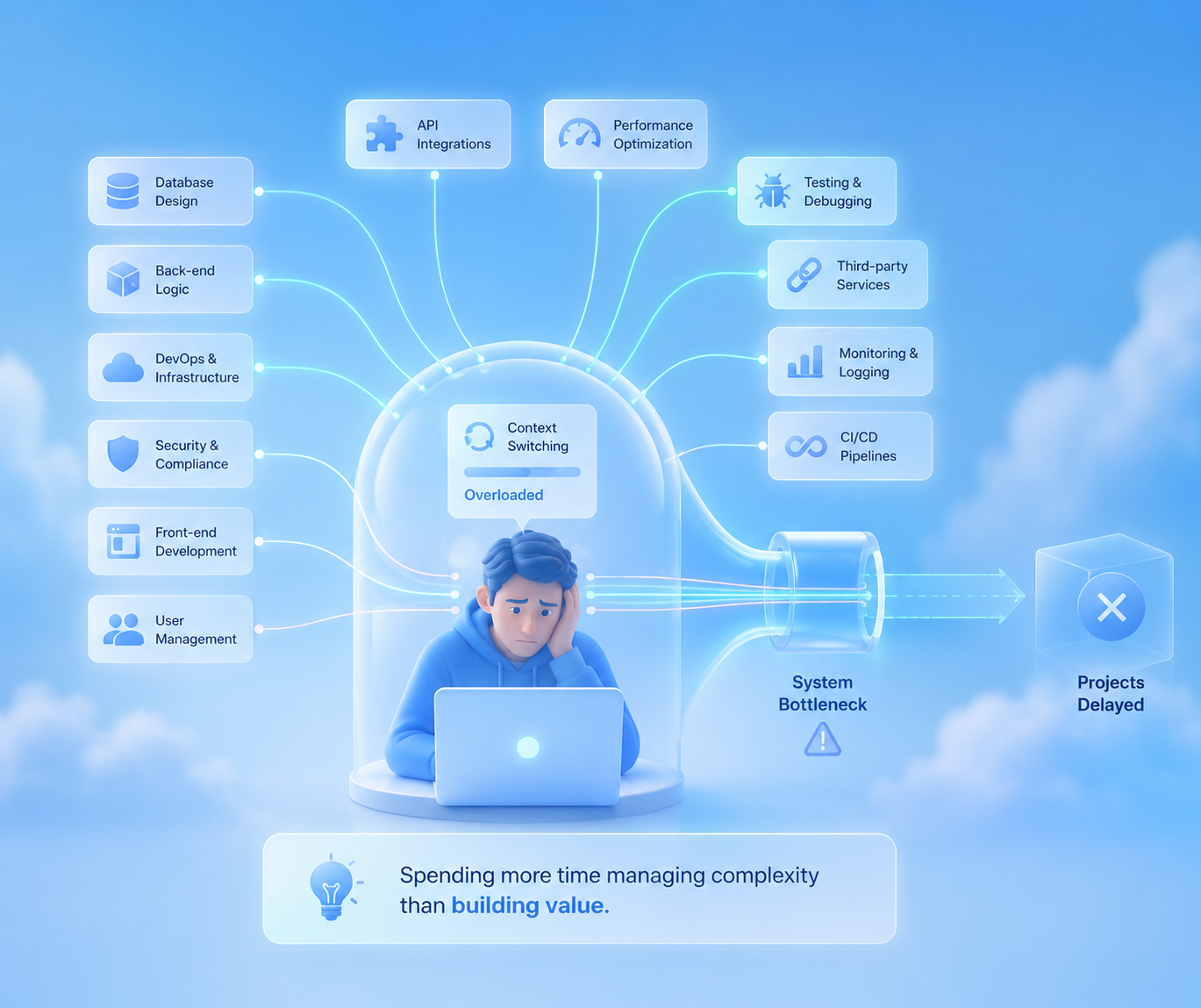
A single role is absorbing multiple system domains, creating invisible boundaries that slow down scaling.
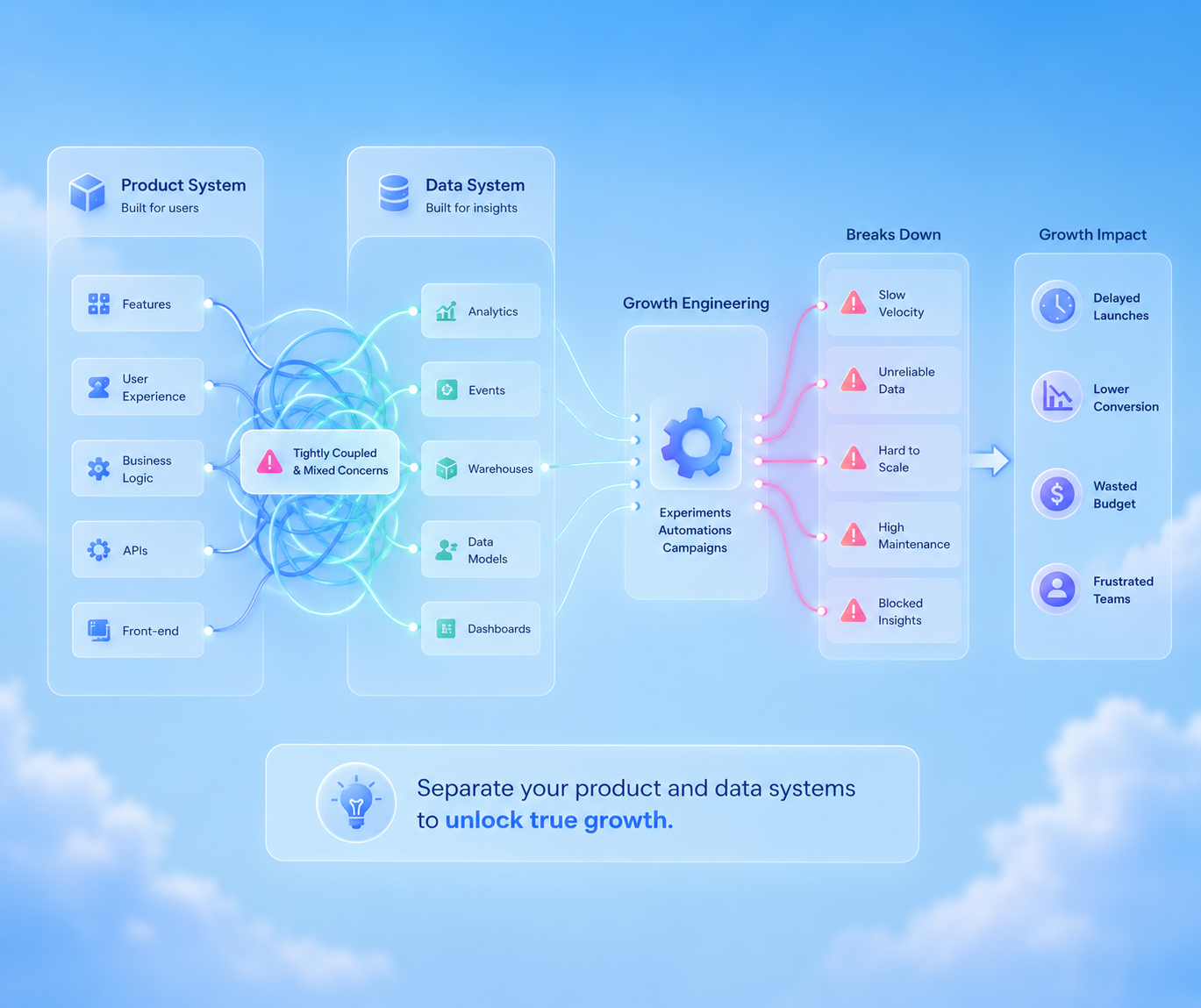
In many modern teams, experimentation, product implementation, and data analysis are merged without clear boundaries, slowing down real scale.