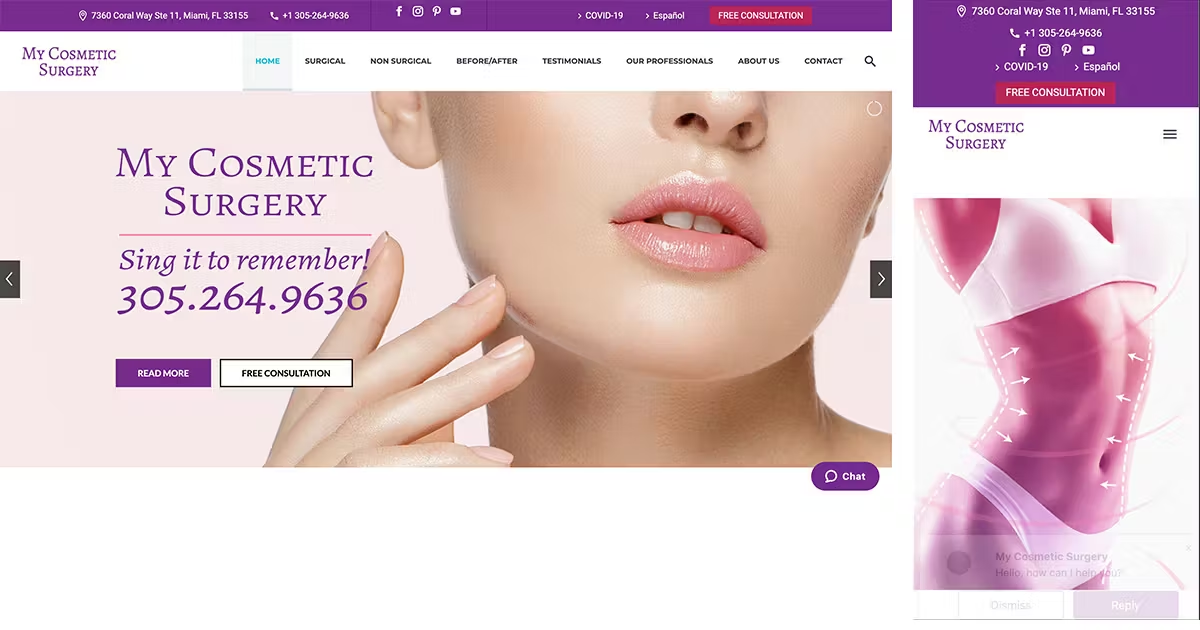
Overview
Systems for
high-volume care.
A high-volume cosmetic surgery network in the U.S. was managing massive patient demand, but struggling with severe operational bottlenecks due to fragmented legacy systems, disconnected APIs, and poor data observability.
The Problem
- High friction and latency across the patient onboarding pipeline.
- Fragmented data silos separating patient acquisition, internal scheduling, and billing systems.
- Heavy reliance on manual data entry and disjointed administrative workflows.
- Zero real-time observability to optimize clinical and operational resources.
The Diagnosis
"The issue wasn't patient volume — it was a fractured technical infrastructure.Disconnected APIs, delayed data feedback loops, and manual operations were creating catastrophic bottlenecks across the ecosystem."
The Solution
System Built.
Patient Pipeline Architecture
Secure, conversion-optimized digital onboarding flows.
Full-Stack Observability
Unified data layer connecting digital acquisition directly to clinical outcomes.
Predictive AI Models
Algorithmic lead scoring for efficient triage and resource prioritization.
Workflow Orchestration
Automated data sync across scheduling, billing, and internal operations.
Multi-Tenant Clinic Infrastructure
Scalable, secure backend architecture built for multi-location expansion.
Event-Driven Architecture
Real-time webhooks synchronizing patient portals with internal CMS.
The Impact.
60%
Reduction in Manual Operations
28%
Increase in System Conversion Throughput
100%
Data Observability
Insight
Growth wasn’t a marketing problem. It was a systems problem.